
Augusta County Deed Records by Instrument
Augusta County's land records hold many instruments, and each one does a different job. Some deeds transfer ownership. A deed of trust, by contrast, secures a debt instead of selling the parcel. A release ends a claim. A plat or easement can reshape the land description without touching the owner of record at all. That distinction matters when you search Augusta County property records by instrument. Read the instrument type, the parties, the date, and the legal description together. Draw no conclusion from a single indexed entry.
| Instrument | What It Adds to the Record | Why Search It |
|---|---|---|
| Deed | Recorded transfer and legal description | Confirm who conveyed and received the parcel |
| Deed of trust or mortgage | Security instrument tied to a debt | Trace a recorded encumbrance and later release |
| Release or satisfaction | Recorded discharge of an earlier claim | Check whether an indexed lien was cleared |
| Plat or easement | Lot layout, access, dedication, or land-use right | Understand the description referenced by a deed |
| Fiduciary or court instrument | Authority or transfer involving an estate or case | Explain a transfer not made by an ordinary sale |
Know what each instrument actually does. A plain deed conveys an interest in Augusta County real estate. A deed of trust backs an obligation. Judgments, mechanics liens, easements, and releases can all mark the parcel record without ever naming a new owner of record. Augusta County's coverage also extends to wills and fiduciary records, so a probate instrument or a later deed may explain how land passed through an estate. Follow the cross-references. Not every indexed item proves a sale happened.
Augusta County SRA Image Access
Virginia Secure Remote Access, called COVERS, is the Clerk's route to online land records. A subscriber must file a signed, notarized application and pay $600 per year. An attorney can add an assistant subscription for $50 per person. Free images are not guaranteed. Statewide SRA guidance notes that some clerks permit index-only searching while images stay gated. So confirm Augusta County's current terms before relying on remote access.
The counter at the Circuit Court Clerk's office serves anyone without a subscription. Staff there can point you to the right books and references. They cannot run a title search or offer a legal opinion, though. A land record's first page must show the property tax ID. The document must be notarized before recording. Per the Clerk's FAQ, no separate Virginia cover sheet is required. For electronic filing, the county lists CSC eRecording, ePN, and Simplifile as vendors.
For remote work, the Virginia SRA/COVERS portal is the entry point for Augusta County deed records.
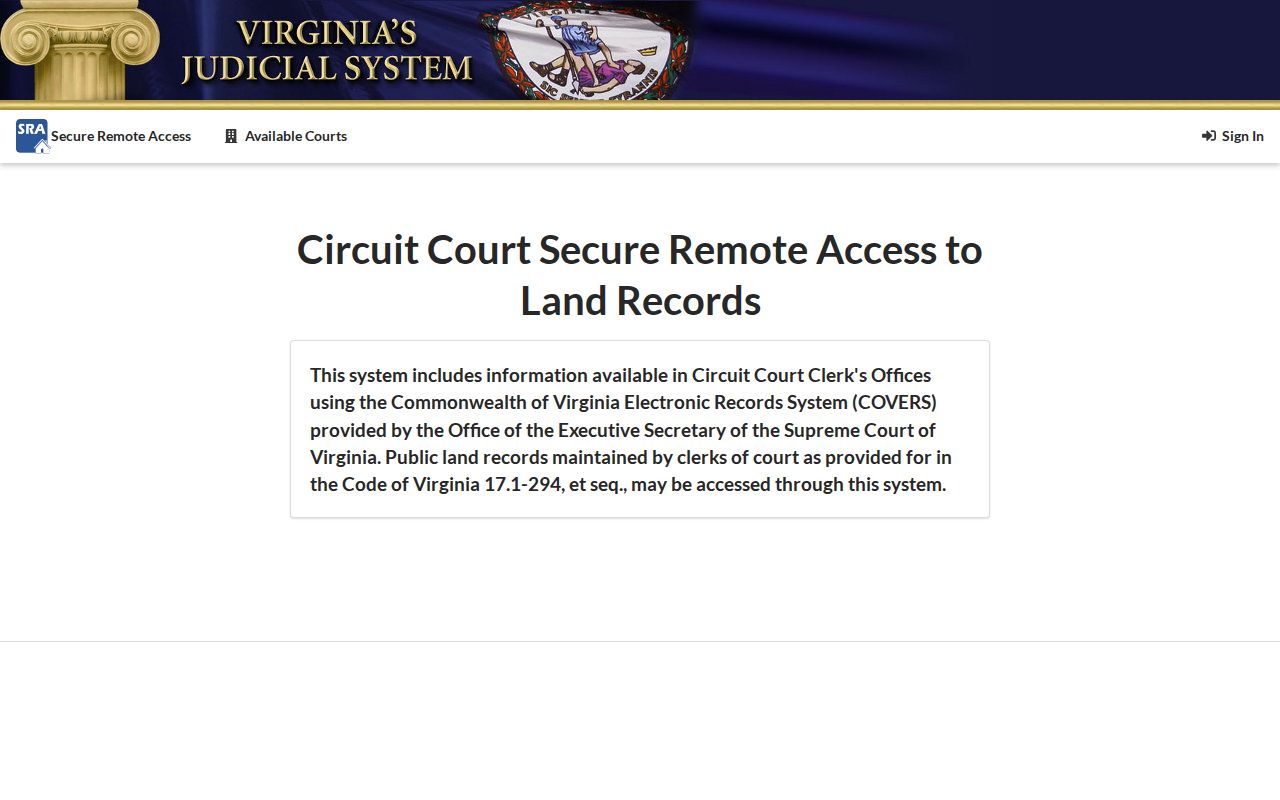
The image shown comes from the shared state system; Augusta County's Clerk sets the local subscription and image terms.
Augusta County Deed Coverage Dates
Augusta County's published coverage is deep. The Clerk lists land records from 1745 to the present. Plats run from 1890 forward. Wills and fiduciary records date from 1745, and judgments begin July 1, 1982. A long index span does not mean every image is viewable from home, though. Exact search labels depend on SRA access or a visit to the counter. Image availability depends on the same.
| Record Group | Published Coverage | Search Route | Access Detail |
|---|---|---|---|
| Land records | 1745 to present | Circuit Clerk index and SRA/COVERS | Image access may differ from index access |
| Plats | 1890 to present | Clerk plat index and GIS context | Compare plat description with the deed |
| Wills and fiduciary records | 1745 to present | Clerk, SRA, historic portal | Use probate authority to explain a transfer |
| Judgments | July 1, 1982 onward online | Clerk judgment index | Check for a later release or satisfaction |
When you land a hit, record the party roles, instrument type, recording date, and the book/page or instrument number. Add the parcel reference, the legal description, and the image status if the screen shows one. Those fields are worth capturing, even if Augusta County's display arranges them differently.
Tracing the Augusta County Grantor-Grantee Index
Every deed pairs a grantor, who conveys the interest, with a grantee, who receives it. To trace a title chain, begin with the newest deed. Treat its grantor as your prior link. Then search that same party as a grantee. That search finds the deed through which the parcel was acquired. Repeat the process with each earlier grantor. Check that the legal description and prior-reference clause still describe the same tract. Augusta County deeds are indexed by party names and document references. A current street address alone will not carry the search.
- Find the newest recorded deed and note the grantee, grantor, legal description, and reference to an earlier deed.
- Search the grantor as a grantee to locate that party's acquisition of the same tract.
- Compare each description, acreage, plat, adjoining owner, and parcel key before accepting a link.
- Continue until the image or index limit, then move to courthouse books or archives.
- Grantor
- The person or entity named as conveying an interest.
- Grantee
- The person or entity receiving that interest.
- Chain of title
- The linked sequence of recorded transfers and related instruments for the tract.
- Book/page or instrument number
- The Clerk's document reference; copy it exactly to retrieve the record.
Augusta County Deed References and Land
A deed reference may cite a book and page or an instrument number. Keep the form exactly as recorded rather than recasting it. Then read the legal description with care. A modern subdivision often uses a lot and section. An older rural tract may instead name a road, a stream, an acreage figure, or an adjoining owner. Keep in mind that today's tax map parcel may not match an old tract one-to-one. Divisions, joins, or adjustments over the years can explain the gap.
Augusta County plats run from 1890 forward. When a deed cites a plat, road dedication, easement, or restriction, follow that citation in the deed records. The county cautions that a restriction can sit many owners back in the chain. The GIS map offers a helpful visual check. But the recorded deed and plat control the land description. Locating a boundary on the ground takes a licensed surveyor.
Augusta County Historic Deed Books
Deed records in Augusta County reach back to 1745. That is a deep archive. For older chains, though, the modern web search may not display an image, and the courthouse deed books plus the grantor-grantee indexes still matter. No fire or destruction of Augusta's land books is on record. So when a search comes up empty, check spellings first. Then look at probate transfers, or compare the prior deed's citation, before assuming a gap. Re-indexing and parcel changes can make a chain less direct than a current street address suggests.
The Clerk offers a free historic collection at the Augusta historic records portal, and the Library of Virginia catalog can help identify archival materials and microfilm. Exact Augusta collection names and scan years still need confirmation, so follow each reference rather than copying one current owner of record into a history. The former-owner chain depends on that repeated grantor-to-grantee check.
One more thing: the Virginia Circuit Court search entry is separate from the land-index search.
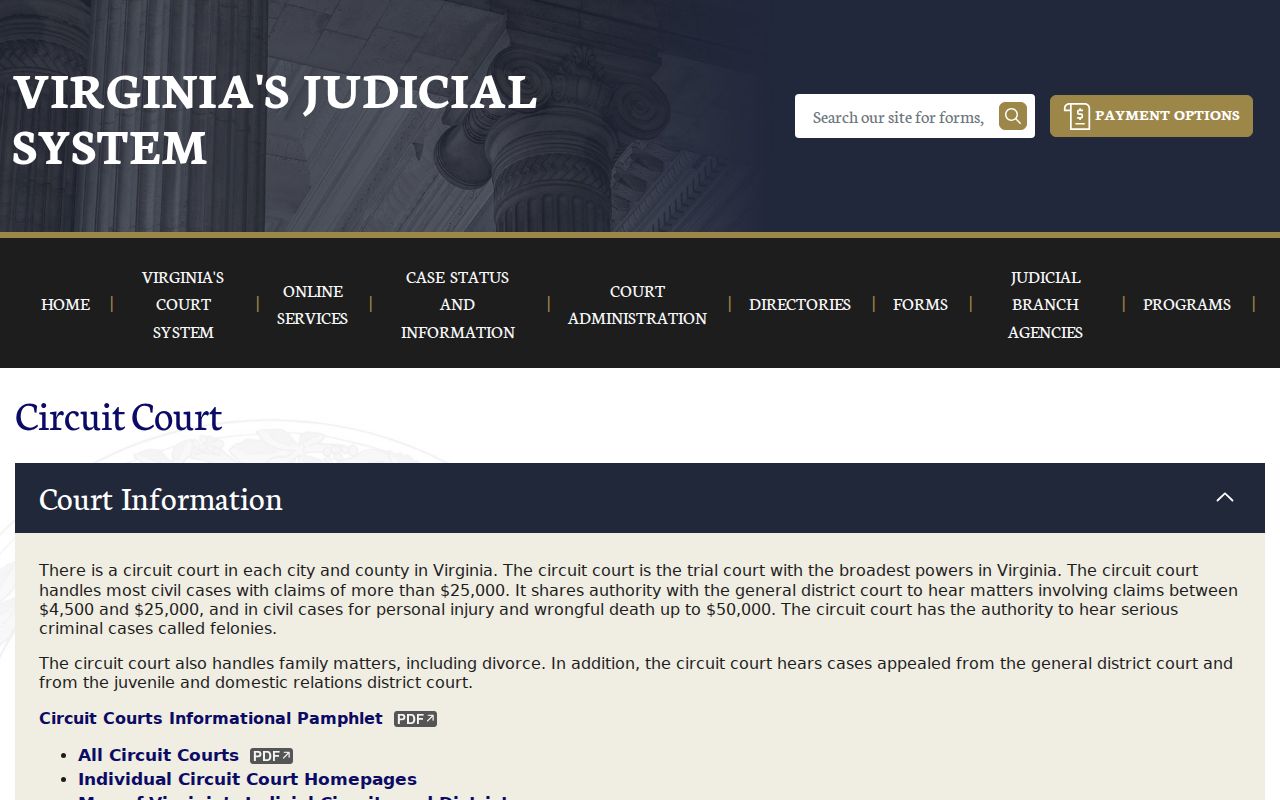
Court case information may explain a partition or judgment. The land index is still needed to confirm a recorded transfer. For older instruments, the historic archive is available through the Clerk's digitized portal.
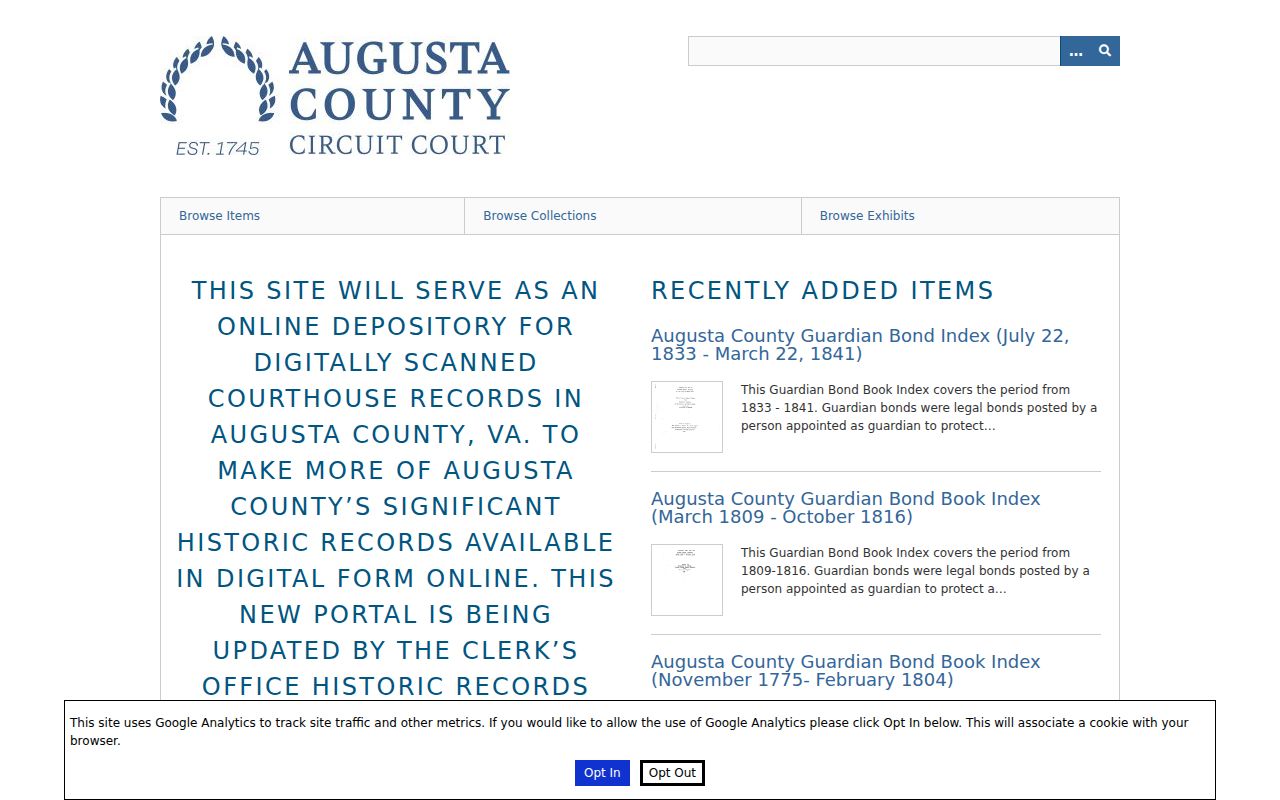
The portal is a lead to selected historic material, and its collection-level coverage varies, so check it before relying on any single result.
Augusta County Property Alerts
The Clerk's e-recording information advertises a property-notification service. Treat any alert as a prompt to inspect the actual recorded instrument. It is not a title guarantee. If a notice surprises you, compare the parties and legal description against the Clerk's record. Use contact details from the county page rather than from a mailer. No alert can explain a deed's legal effect. It cannot confirm that a parcel is free of other claims.
Property-record solicitations can imitate county letters. They may offer an overpriced deed copy or an urgent protection service. Do not reply to the mailer. Open the county site yourself, or call the Clerk's Land Records Division at 540-245-5320. Staff can point to a reference or explain access. They cannot give legal advice or certify a chain of title. Save the document reference. If an instrument appears to affect an ownership interest, consult a Virginia attorney.
Requesting an Augusta County Deed Copy
Use the SRA/COVERS index if remote access is available to you. Otherwise, visit the Clerk at 18 Government Center Lane in Verona. Augusta's materials do not state a single copy charge for every document. Request the current fee for the exact record, and ask whether certification is needed. Provide the parties, the date, the book/page or instrument number, and the parcel description. The Land Records Division is listed at 540-245-5320, and the general Circuit Court Clerk number is 540-245-5600.
Recorded, not guaranteed. The Augusta County deed index shows instruments accepted for recording, but an index is not a title opinion and cannot rule out every unrecorded interest. A title professional must examine the documents and their legal effect.