
Tracing Past Augusta County Owners
No single assessor card will hand you a full owner history. The real trail sits in a run of deeds. Start with the current recorded grantee. Then step back through each grantor. Step back through the instrument that conveyed the parcel to that person. Augusta County's Clerk offers a deep shelf of material: land records and wills reaching back to 1745, plats beginning in 1890, and judgments available online from July 1, 1982. Those dates mark what record groups exist. They do not promise that every image is open from home.
| Source | Years It Covers | Where Held | What It Shows |
|---|---|---|---|
| Land-record index and deed books | 1745 to present in published coverage | Augusta Circuit Court Clerk / SRA | Transfers, parties, descriptions, references |
| Recorded plats | 1890 to present in published coverage | Circuit Court Clerk | Subdivision, lot, road, dedication, easement |
| Wills and fiduciary files | 1745 to present in published coverage | Circuit Court Clerk | Estate authority and possible transfer clues |
| Historic archive and library | Collection years vary | Clerk portal, Library of Virginia, county library | Selected historic items, directories, and local context |
Let the deed index carry you through recorded transfers first. The chain may shift through a subdivision, an estate, or a court action. Follow the cited plat or fiduciary file instead. The Library of Virginia and the Augusta County Library open more doors. Their archive, directory, and newspaper leads are worth exploring. Complete year runs should be confirmed with each institution. A directory can place a household at an address in time. It still cannot prove title. Only a deed or other controlling instrument establishes a recorded land transfer in Augusta County.
Augusta County's 1745 Deed Trail
The Clerk advertises Augusta land records and wills from 1745 to the present. That is the earliest date in the published coverage. It is not a promise that a modern address search will surface every historic owner. Older entries often live in deed books and grantor-grantee indexes at the courthouse. Start with the current legal description. Then carry acreage and adjoining owners backward. Note each book, page, or instrument reference as the names change.
Remote search and image access are two different things. Augusta's SRA instructions describe an annual subscription. The free index-only arrangement should be confirmed in the live system. If the online search ends, ask the Land Records Division to identify the proper volume. If an image sits behind a gate, ask the same office for the retrieval route. No official source reports a fire or loss of Augusta land books. A missing reference should prompt a spelling, index, probate, or parcel-change check first.
The Virginia SRA/COVERS system is the remote entry for the Clerk's land-record index.
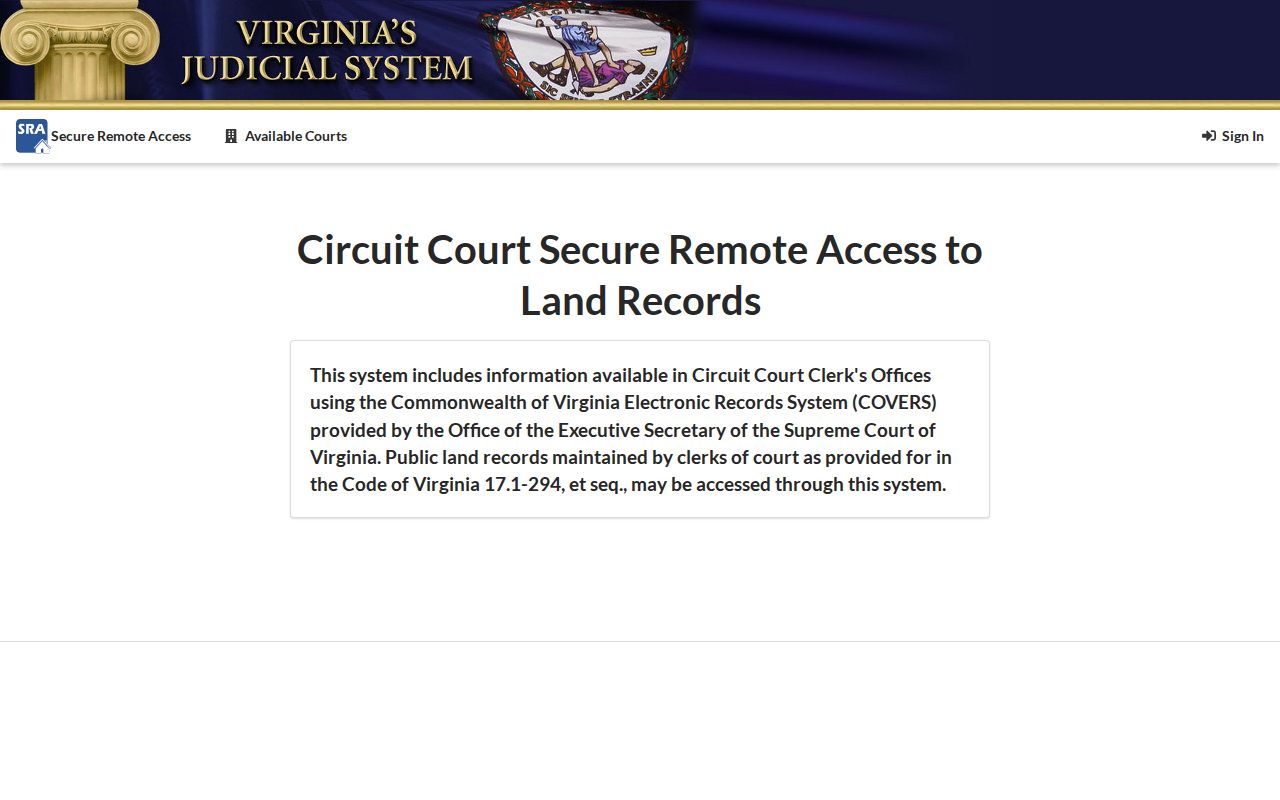
The state entry page does not spell out every Augusta image rule. Confirm local terms before relying on remote access.
Walking Back the Augusta County Deed Chain
A grantor conveyed the interest. A grantee received it. To walk the chain backward, search the newest grantor as the grantee on an earlier deed. Compare the same parcel at every step. A similar owner name means little if the acreage, road, lot, or adjoining land differs. The legal description and prior-deed citation hold the chain together. This matters especially when a rural route or street name in Augusta County has changed over the years.
- Find the latest deed and note its grantee, grantor, instrument type, and land description.
- Use the prior reference and search the grantor as an earlier grantee.
- Compare acreage, lot or tract language, adjoining owners, and plat citations.
- Continue through the index and books, marking probate or court transfers that changed the path.
- Grantor / grantee
- The party who conveyed an interest and the party who received it.
- Chain of title
- The connected sequence of recorded instruments for a tract.
- Legal description
- The land text used to identify a tract beyond its street address.
- Book/page
- A Clerk reference to the volume and page where a document is recorded.
Augusta County Plat History
Plat coverage begins in 1890 in the Clerk's published table. A subdivision plat can explain a great deal. It shows how a larger farm tract became lots. It marks where roads were dedicated. It also notes which easements or restrictions carried forward. A later deed may simply cite that plat instead of restating its terms. Does the present parcel fail to match an earlier description? Look for a replat, boundary-line adjustment, consolidation, or subdivision instrument.
Augusta County warns that restrictions can appear many owners back. A thorough historic owner search should therefore include plat names. It should also cover lot and section references, and any declaration a deed cites. Compare the plat with the recorded deed itself. Never assume a GIS outline reproduces the legal description.
Augusta County Probate Transfers
An estate transfer can break the tidy grantor-to-grantee pattern. The Circuit Court Clerk serves as Augusta County's probate officer. The Clerk lists wills and fiduciary records from 1745 onward. A deceased owner may be followed through a will, the qualification of an executor or administrator, a list of heirs, or a commissioner deed. A court order can also settle the land. A will alone does not always complete a land transfer. Search the fiduciary file and the land index together.
Search the decedent, the estate name, the executor, and any later grantee. Check whether the legal description stayed the same. See whether an heir took only a share. Note whether the court directed a sale. Vital records can help establish a death or name change. Still, the deed, fiduciary deed, or court order controls the recorded land trail.
Augusta County Historic Archive Leads
The Clerk links a free historic records portal. The Library of Virginia catalog offers a second archival route. Treat both as discovery tools and confirm each item before citing it. The county library may hold local directories, newspaper microfilm, obituary indexes, yearbooks, and genealogy databases. Exact runs require a reference-desk check.
For house history, use a directory or newspaper notice as context first. Then return to the deed books and plats. A directory may mark an owner or a renter. An occupant is not automatically the title holder. Follow the land description and the grantor-grantee names. That establishes the true transfer sequence in Augusta County property records.
The Augusta historic records portal offers a digitized collection lead.
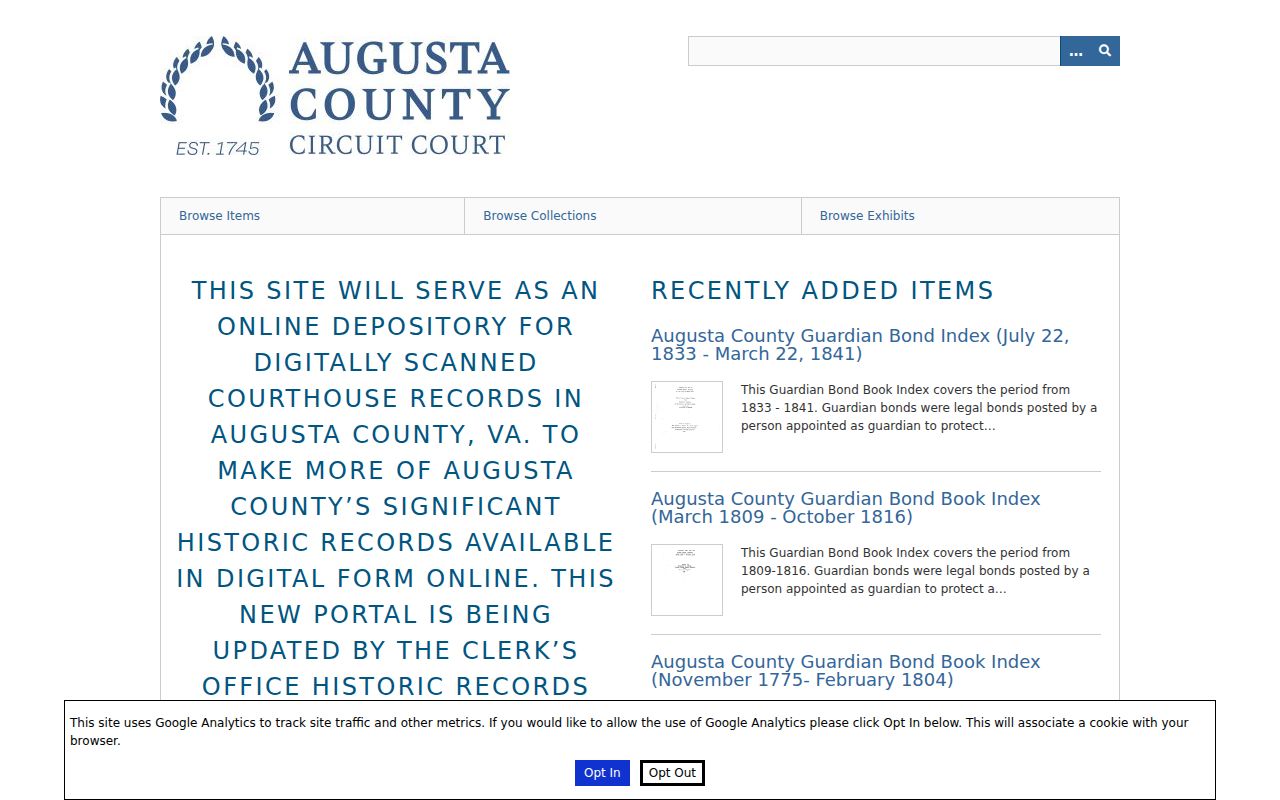
Archive holdings differ from one collection to the next. Check the item-level dates and image access for anything you plan to use.
The Library of Virginia catalog points to state-held land and genealogy material that can support an Augusta County property records search.

Use the catalog to find a relevant collection and check the repository's copy rules.
Occupant Clues and Former Owners
Directories, newspapers, obituaries, and probate files all hint at who lived on a parcel. A directory usually names an occupant or head of household. That occupant is often not the owner of record on the deed. That gap matters. An obituary or local history can still explain a move or an inheritance. It can show a family tie a deed index misses. Treat each clue as a lead only. Every proposed ownership period needs support from a deed, fiduciary record, or similar instrument. Only then does it belong in a chain.
Place names shift too. Old roads get renumbered. A farm may also carry a nickname that appears nowhere in the deed records. A former resident can help you identify an adjoining family or an old place name. Still, the legal description and the grantor-grantee index are what establish recorded transfers. Note which source backs each name and date. That habit keeps a local-history clue from turning into a quiet title conclusion.
How Far Augusta County Records Reach
The Clerk's published coverage is deep. Land and fiduciary records reach back to 1745. Plats reach to 1890, judgments to July 1, 1982, and court records online from 1986. These are separate record groups, each with its own search and image routes. A single chain can move from a digital index to bound books. From there it can run to a historic portal or an archive catalog. No source records any land-book destruction event for Augusta County. The deed record therefore runs largely intact.
Lawful use. Former-owner research supports house history, a title review, and parcel diligence. Do not use an old address or owner name to track, harass, or harm a living person.